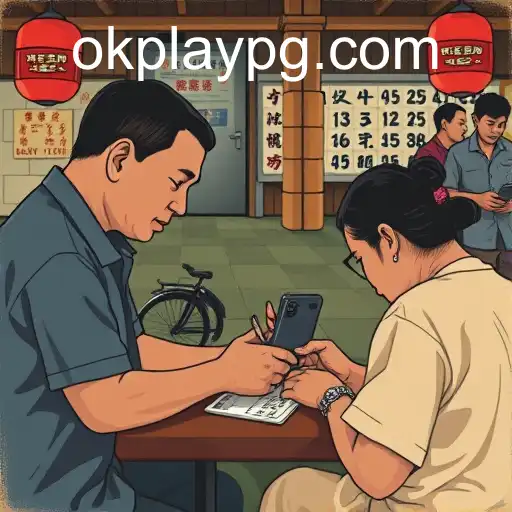
The Complex World of Jueteng and the Emergence of Okplay
Jueteng is an illegal numbers game that has been part of the fabric of the Philippines for generations. While efforts to eradicate it have been persistent, jueteng remains deeply rooted in certain communities, gracefully maneuvering through the complexities of law, culture, and social implications. Amidst this context arises a new player in the gaming scene, the keyword 'Okplay,' which is poised to add another layer to the gaming narrative in the Philippines.
Understanding the Mechanics of Jueteng
Jueteng operates through a simple mechanism that involves betting on a pair of numbers ranging from 1 to 37. The game is managed by a cabal of people with tasks ranging from collecting bets, determining winners, to distributing prizes. Despite being illegal, jueteng's simplicity and accessibility have contributed to its widespread popularity, particularly in rural and less affluent areas.
The game is often played twice a day with random combinations drawn from rattan containers. Jueteng transcends being merely a game; it has become a source of livelihood for many who work within its covert operation system. With a lack of viable economic alternatives, some individuals find steady employment within these illicit gaming structures, cementing jueteng's role in their daily lives.
The Social and Economic Ramifications
Jueteng's existence has significant social and economic ramifications. The game's deep entrenchment in local culture is evident as it subtly underpins social gatherings and community events, forming part of the local dialogue. Its promises of quick financial gain can lure individuals who are financially disadvantaged, offering them hope albeit fraught with legal implications.
Economically, jueteng serves as a shadow industry, purportedly generating billions in untaxed revenue annually. This unregulated economy not only deprives the government of revenue but also feeds into a cycle of corruption and illegality. The law enforcement agencies, often complicit, have struggled to effectively clamp down on its operations, with some benefiting from purported kickbacks.
Government Efforts and Challenges
Successive administrations have attempted to combat jueteng through various means, from stringent law enforcement to offering state-sanctioned alternatives like the Philippine Charity Sweepstakes Office (PCSO) lotto. However, these efforts have met with limited success. The codification of alternative legal gambling forms has not deterred dedicated jueteng players who remain unwavering in their loyalty due to cultural familiarity and operational simplicity.
Furthermore, political entanglements pose significant challenges. Jueteng syndicates often enjoy patronage from local politicians, creating a network that defies interruption by external authorities. This symbiotic relationship has cast clouds over governance efficacy, where promised crackdowns deliver sporadic success at best.
The Introduction of Okplay
Amidst the persistent interplay of legality and illegality in the Philippine gaming scene, the emergence of 'Okplay' introduces a new dynamic. While details remain sparse, Okplay appears to be an innovative entry or recontextualization of traditional games with digital undertones, aimed at engaging a new generation of participants keen on gaming in regulated environments.
Fusing modern technology with time-honored gaming traditions, Okplay could offer a bridge between conventional gaming forms and contemporary interests. For individuals finding themselves entangled in the mirage of illegal gaming, Okplay might serve as a lucrative alternative that aligns entertainment with legality. However, its ultimate impact will largely depend on how it positions itself amidst jueteng’s established network and the digital transformations in gaming preferences.
The Future of Gaming in the Philippines
The evolving gaming landscape in the Philippines finds itself at a crossroads where socio-economic factors, technological advances, and legislative frameworks converge. As stakeholders deliberate over the future of gaming, the intersection of tradition, legality, and modernity will undoubtedly guide policies, influence community sentiments, and determine the trajectory of new entrants like Okplay.
Addressing the deep-seated roots of games like jueteng cannot be devoid of considering their cultural and economic dimensions. As Okplay and other gaming innovations carve out their space, a collaborative approach involving communities, law enforcement, government, and the gaming industry is likely essential. The ultimate goal would be to usher an era where gaming is not merely a matter of leisure but also a symbol of lawful economic participation in the global digital economy.
Conclusion
Within this intricate web exists opportunities for transformation and the promise of a robust gaming environment that respects cultural heritage while embracing progress. The Philippines stands on the precipice of a potential gaming renaissance, with Okplay epitomizing the curiosity and resilience of an evolving industry.